
Treatment Technology
IMRT
Radiation Therapy
IMRT, or Intensity-Modulated Radiation Therapy, is a type of specialized external radiation treatment for cancer in which a tumor is irradiated with incredibly precise targeting and radiation doses. IMRT is performed by using a CT or other 3-D image scan to create a detailed mapping of a tumor and the surrounding area(s), so that oncologists can know exactly which areas need to receive controlled doses or radiation, and which areas do not. Through this process, the cancerous tumor receives the exact amount of radiation needed to kill the cancerous cells, while minimizing the risk and excess radiation that is delivered to surrounding tissue and organs.
IMRT is a powerful, highly-precise method of radiation that can be used for a variety of cancer types. IMRT can be most effective when used to treat prostate cancer, lung cancer, brain cancer, gastrointestinal cancer, and much more. Here at Evansville Cancer Center, our highly qualified team of radiation oncologists and healthcare professionals will work tirelessly to help design a treatment plan specifically tailored to each individual patient, giving you the best possible outcome while minimizing the amount of inconvenience or side effects over the course of your treatment.
What happens during IMRT?
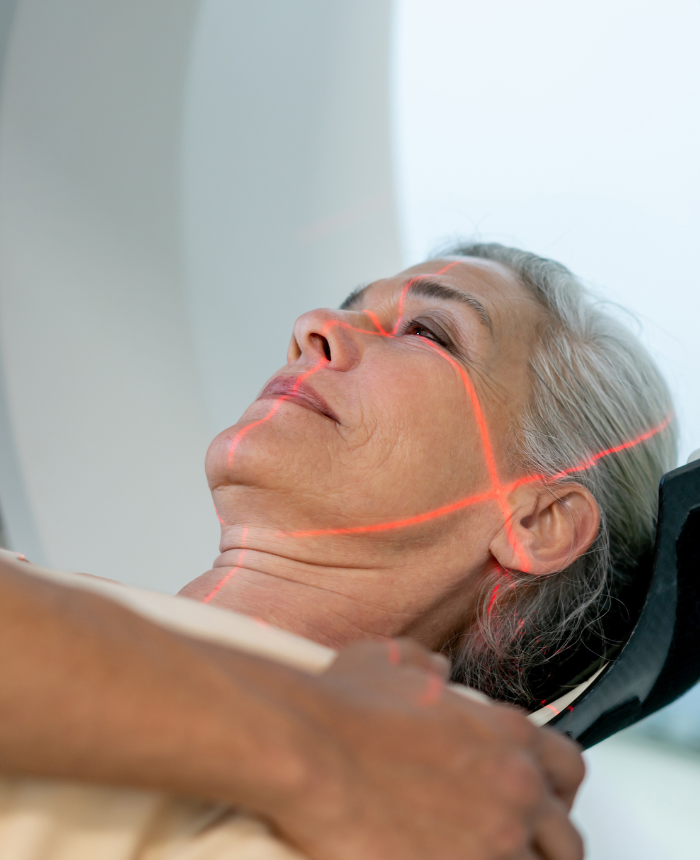
At the beginning of your journey with IMRT, your radiation oncologists will take detailed scans/three-dimensional images of your tumor, in an effort to understand exactly which area(s) do and don’t require radiation. Once this is completed, a powerful machine delivers targeted bursts of radiation to the necessary areas, irradiating and killing cancerous cells while minimizing the risk to all other areas within a patient’s body. Your radiation oncologist may also adjust the intensity and size of the radiation that you receive over the course of your treatment, in response to your tumor’s behavior and any other potential side effects.
How long radiation treatment takes depends largely on the type and severity of cancer, but most patients are able to complete each dose of radiation in about 15-30 minutes, and usually receive radiation up to five days a week for a total of five to eight weeks. Your radiation oncology team will work 1-on-1 with you to ensure that you’re receiving the exact amount of radiation needed for your case, and to reduce the impact that your treatment will have on your schedule, day-to-day health, and other aspects of your life.
What are the advantages of IMRT?
IMRT provides a variety of benefits over other less-modern types of radiation therapy. The largest benefit is that because IMRT begins with conducting detailed three-dimensional scans of a patient’s body, a provider can gather a much more accurate understanding of their patient’s tumor, and then devise a treatment plan that maximizes efficacy while minimizing discomfort. IMRT also allows for different amounts and intensities of radiation to be applied over the course of a patient’s treatment, tailoring each person’s radiation to their individual treatment response and needs. Lastly, the hyper-accuracy of IMRT reduces the risk of excess radiation being delivered to tissues and organs adjacent to the tumor, allowing for an exponentially safer treatment and ultimately better changes for long-term remission and quality of life.
What are some side effects of IMRT?
While IMRT is highly precise and many patients report having little-to-no side effects at all, some patients do experience side effects as a result of their radiation treatment. These symptoms can include:
- Difficulty swallowing
- Diarrhea
- Nausea/Vomiting
- Headaches
- Hair Loss
- Soreness
- Swelling
- Skin Irritation
- Fatigue
- Erectile Dysfunction
It’s important to remember that even if you do experience one or more of these symptoms, there are things that your health team can do to help. Speak with your radiation oncologist and medical professionals throughout the course of your treatment if and when you notice any side effects, and your team will work to minimize your discomfort, through adjustments to your treatment, medications, at-home remedies, and more, as much as possible.
Our Cancer Care Technologies
We treat patients using proven technologies in radiation oncology, including TrueBeam®, Image-Guided Radiation Therapy (IGRT), RapidArc®, Brachytherapy, and Intensity-Modulated Radiation Therapy (IMRT). Click below to learn about each of our cancer care technologies.
TrueBeam®
TrueBeam® Radiotherapy is a type of linear accelerator used to deliver precise external beam radiation.
IGRT
IGRT combines 3D images with the precise technology of either 3D-CRT or IMRT to pinpoint and treat cancerous tumors.
RapidArc®
Volumetric arc therapy (VMAT) is an advanced form of IMRT that allows a targeted, 3-D dose of radiation to be delivered directly to a tumor.
Brachytherapy
Brachytherapy is a form of radiation therapy where a temporary or permanent radioactive implant is placed inside the patient.
IMRT
IMRT is an advanced form of external radiation treatment that allows precise targeting of tumor cells.
Proven Technologies
We utilize proven technologies in radiation oncology, including TrueBeam®, IGRT, RapidArc®, Brachytherapy, and IMRT.